Recently in Stats & Figures Category

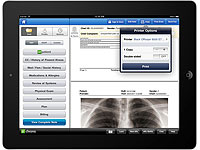
StethoscopeInteresting data from Global Industry Analysts today. According to the research firm, electronic medical records (EMR) will comprise a $5.4 billion market in North America by 2015. In Europe, that number is $1.4 billion.

Why does it matter? Obviously, updating hospitals and healthcare concerns to handle the data will be an IT-intensive effort, which might also prove to be a boon for SaaS providers and cloud computing firms that already know (or should know) a thing or two about running energy efficient data centers. The best part? Hospitals and doctor's offices stand to save a ton on paper, not just buying it, but also filing it, storing it, and eventually disposing of it.

According to the press release, below are some of the firms to watch for as the market racks up those billions. (Note the healthy sprinkling of IT companies.)

Key players profiled in the report include Agfa-Gevaert Ltd, Ascribe plc, Cambio Healthcare Systems, Cerner Corporation, CompuGROUP HOLDING AG, Computer Programs and Systems, Inc, EBIT AET S.p.A., Eclipsys Corporation, Egton Medical Information Systems Limited, Epic Systems Corporation, GE Healthcare, Hewlett Packard Company, IBA Health (Europe) Ltd, IMS MAXIMS plc, Indra Sistemas SA, iSoft Group plc, McKesson Corporation, MDS Medical Software, MedPlus, Inc, Medical Information Technology, Inc, Medasys SA, Nexus AG, Noemalife SpA, Profdoc AB, QuadraMed Corporation, SAP (UK) Limited, Siemens Medical Solutions GSD GmbH, and System C Healthcare plc, among others.

It will be interesting to see if the estimates change if and when healthcare legislation wends its way through Congress and whether records portability finally takes off.

Image Credit: Flickr user virtualis - CC

Gartner

According to Gartner, by 2012, PCs will be so energy efficient that 60 percent of the greenhouse gasses attributed to them will have been generated before it's ever turned on.

From eWeek:

Regarding environmental breakthroughs, by 2012, Gartner expects that 60 percent of a new PC's total life greenhouse gas emissions will have occurred before the user turns on the machine for the first time, thanks to advancement in PC energy use. Additionally, carbon remediation costs are expected to be included in most IT business cases by 2014.

Source: eWeek

Don't worry, there were energy savings to be had, $500,000 rather than the estimated $3 million.  It sounds like a failure, but the economy put a damper on the expected surge in energy prices in the last year.

However, there were a slew of other savings, which indirectly impact the consumption of energy.  For example, the state
state fleet 3 million fewer miles in the past year, resulting in a savings of $1.4 million.  Labor costs, plummeted by $4.1 million because of state workers used a lot less overtime, too.  I imagine gas tanks stayed fuller longer for state workers as a result of the shorter work week as well.

Source: The Salt Lake City Tribune

Telephone PolesI am a big supporter of using broadband access as a green IT strategy (and a way to combat pig flu). But it goes without saying that before you can enjoy the benefits you need true, fast-speed broadband access wherever you reside or roam.

In preparation of OneWebDay this past Tuesday, technology journalist and broadband stimulus grant writer Alex Goldman of Net-Statistics.net delivered a speech on universal broadband that lays out how high-speed access to the Internet is not a luxury. He goes into further detail in his blog post commemorating OneWebDay. Although not expressly about reducing carbon, there are parallels to some green IT principles like dematerialization (downloading IRS forms instead of fetching them at the post office) and telework.

Unfortunately, the U.S. is still behind the times, putting those benefits out of reach for many Americans:

In broadband, the U.S. is 15 years behind South Korea. One attendee at Saturday's event, Regina Walton, writes that the speeds don't tell all of the story: Korea's utilities also provide -- gosh -- customer service. As this map from the BBC shows, several other nations around the world are also ahead of the U.S. in broadband speeds.

We're also still wrestling with getting ISPs to allow unfettered access to the Internet, although the FCC is working to remedy that.

Put simply, without a broadband infrastructure that resembles a free and roomy freeway instead of creaky and tollbooth laden back roads, consumers and small businesses have the deck stacked against them if they want to telecommute or reduce their carbon footprints by offloading computational tasks to the cloud. Beyond the energy efficiency angle, broadband is growing increasingly critical for an industrious workforce and an informed populace.

Be sure to read the rest of Goldman's universal broadband insights.

Photo credit: Rennett Stow / Flickr - Creative Commons

The EPA estimates that out of the 2.25 million tons of electronic waste generated by the U.S. each year, only 18 percent (405,000 tons) of it is collected for recycling. I discovered the statistic in this Treehugger story about e-waste, which paints a very troubling picture of what poor handling of e-waste is doing to developing nations (the 60 Minutes video helps).

But it's not all doom and gloom. Just by reading this post, you're going to at least think again before tossing that old cellphone into the trash, aren't you? Failing that, companies like WM Recycle America are taking steps to make sure that every bit of electronics they collect is responsibly recycled.

And it could pay off.  Although recycling electronics isn't cheap, there's $15,000 worth of metals in a metric ton of used cellphones waiting for enterprising folks that are willing to find economical and ecologically-friendly ways to extract it.

Cell Tower - Flickr/TheTruthAbout...They may have faded into the background (some pretty convincingly), but all those those cell sites require a lot of power!

In his new Pike Research report, "How Mobile Networks Can Cut Carbon" (subscription required), Clint Wheelock finds that with a little cleantech and some data center greening, mobile operators can cut their infrastructure CO2 emissions by 101 million tons, or 42 percent, by 2013.

Photo Credit: Flickr/TheTruthAbout...

Dell LogoDell released its 2009 Corporate Social Responsibility Report (PDF) this week. Within are many statistics related to the IT giant's work on the environmental front.  Here are some of the highlights:

Lower Carbon Emissions:

Completed 88 projects to save 17 million kWh of annualized electricity
use, avoiding 4,300 tons of annualized green house gas emissions.

E-Waste:

Exceeded its commitment to recover 125 million kilograms of used computer equipment for responsible recycling in 2008, bringing the company's total used equipment recycling to more than 275 million pounds.

Energy Star:

Expanded its portfolio of energy-efficient products, offering customers 148 Energy Star-certified configurations of desktops, laptops, workstations, monitors, printers and multi-function devices.

Grab the full report here.

Ubuntu LogoAn interesting little factoid emerged today.  According to David Finch, nearly a third of the netbooks sold by Dell ship with Linux, Ubuntu to be precise.

OSNews reports:

Even though Dell is only the fifth-largest manufacturer of netbooks in the world, it is widely praised by the Linux community as one of the few vendors who does this whole Linux OEM thing right: a well-supported, default Ubuntu installation, without toy user interfaces or software releases that are two years old. Finch told PCWorld that Dell is about to update their Linux offering to the latest version of Ubuntu somewhere in the coming weeks.
Interesting indeed...

Last August, Utah moved its many of the state's government offices to a four-day work week. Apart from a nice long three-day weekend every week for many of the state's workers, other benefits include the 13 percent savings attributed to reduced energy use. Monetarily, that amounts to $1.8 million that taxpayers saved thanks to computers, office lighting and HVAC systems that remain off off an extra day every week.

The state is still working to maximize the savings, but first it has to unravel a knot of complications, like offices where the electricity is factored into the rent. There's also scheduling difficulties to contend with, especially for early birds and those that burn the midnight oil.

Even though employees are still working 40 hours a week, Harrington says energy savings are being realized under the new schedule because buildings were previously being used at all hours of the day to accommodate wildly divergent work schedules and personal preferences. Now, anyone who comes into work early, stays late or comes in over the weekend does so without being guaranteed the heat or air conditioning will be on.

Unsurprisingly, a solid majority of state employees want to stay on a 4-day, 10-hour a day schedule.

A solid 82 percent of the state employees working the schedule want to keep it. They're feeling healthier, volunteering in greater numbers, and exercising more. Utah estimates that, all told, their experiment saved at least 12,000 metric tons of CO2 from being created -- the same as taking 2,300 cars off the road for a year.

A healthier workforce too! What's not to like?

US Wind Power Capacity Map

It took a while, but the U.S. is a leader in wind power production, culminating in 28,635 MW as of April 30, 2009. See a decade's worth of growth via an animated map courtesy of the U.S. Department of Energy.

Source: CleanTechnica

Archives