Results tagged “Amazon”

Kindle for PCTo be honest, I was less than wowed when I heard about Amazon's Kindle for PC software (Mac version available soon-ish). After reading BetaNews' take on it, it occurred to me that Amazon may have already established a toe-hold in the tablet market well before Apple ships its mythical slab (sub req'd) or Microsoft launches the Courier (if ever).

System requirements for the software are extremely modest: XP SP2, Vista, or Windows 7, at least a 500 MHz AMD/Intel processor and 128 MB of RAM, (800 x 600) screen resolution, and 100 MB storage. Conceivably, if it supported Linux-based operating systems or WinCE, such a lightweight app could actually run agreeably on recycled hardware; providing the foundation for a DIY Kindle actually running Kindle software.

There's nothing preventing an owner of a current Windows-based tablet PC like the Dell Latitude XT2 from loading it onto their machines now and sparing a few trees in the process.  Just like that, you have an full e-book platform in a fairly portable package on a screen that handily beats most e-book readers in terms of size. Chances are you already carry your tablet PC around, anyway. Plus, there's nothing else to buy (the software is free too).

The whole selling point behind e-books, to me at least, is that you can come close to replicating the experience of reading print thanks to electronic paper. (I once tried to read "Twenty Thousand Leagues Under the Sea" on a Palm and it fell several thousand leagues short.) But for the few people out there that invested in a tablet PC, your e-book tablet has arrived.

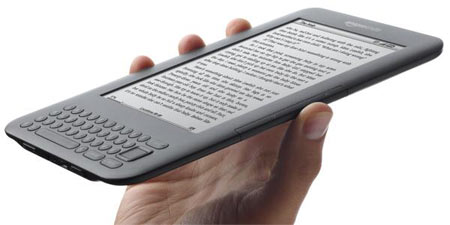
Kindle 2Amazon today exposed the downside of an always-on, cloud-connected e-book platform. Ironically enough, the e-tailing giant yanked George Orwell's "1984" and "Animal Farm" published by MobileReference from customers' Kindles.

That's right, someone flipped the kill-switch from Amazon HQ and every Kindle within Whispernet's coverage area found their digital copies of the books deleted.

Customers were refunded, so they were made monetarily whole, but there are lingering concerns that a person's collection of digital literature can fall prey to the machinations (or whims) of publishers. Granted, there's a lot we don't know about what prompted this move and, for now, Amazon is taking the vague route toward an explanation. (There are other versions available for purchase.)

As much as eco-conscious geeks long for the end of dead-tree books, here's one situation in which paper prospers. Short of a publisher dispatching someone to your home to reclaim a book off your shelf, there's little they can do to reclaim their published work. They have to bite the bullet and learn from their error or business hiccup.

And let's not dismiss the intrusiveness and just plain creepiness of a corporation--imagine a government--that can reach into your devices and excise books or data that they deem you shouldn't have in your possession, whatever the reason.

Let's hope this is the first and last time this happens. As it stands, my desire for a Kindle is somewhat diminished after this episode.

Source

Update: It looks like the e-books that were pulled were unauthorized.

Amazon Cuts Kindle 2 Price

Kindle - Price Drop
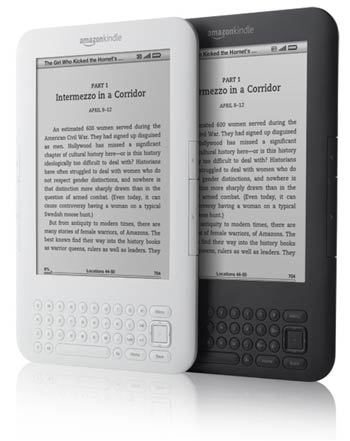
Amazon's Kindle 2 e-book reader is cheaper today by $60. The online retailer knocked 17 percent off its $359 price tag for a consumer friendlier $299. Tempted now?

The larger Kindle DX's price remains unchanged at $489, in case you were wondering.

Symantec to expand cloud-based software - Reuters

Symantec's hosted storage services, which consumers and businesses access over the Web, are among its fastest-growing products. Salem said companies were originally hesitant to use the Internet to transmit sensitive information, but are gradually becoming more comfortable with the concept, thanks to improved technology for securing the data.

VMware Targets SMBs with vSphere - Network Computing

VMware will introduce three new VMware vSphere 4 product editions for SMBs, that the company claims will deliver cost-effective server consolidation, high availability and data protection to enable 'Always on IT'. Small businesses can deploy a server consolidation and management solution for only $166 per processor with VMware vSphere 4 Essentials and get higher application uptime with VMware vSphere 4 Essentials Plus (only $499 per processor)--features which VMware claims are out of reach for most small companies.

Hitachi claims green benefits with new blade servers - vnunet.com

The BladeSymphony 2000 now boasts 144GB of memory, and the server's bandwidth has been increased to help ensure that virtualised environments have the necessary resources. The platform maintains a high server density, and eight blades can be squeezed into each 10U chassis.

Why My Company Uses Amazon's EC2 Cloud - Computerworld

ShareThis uses the data it collects from each customer site to analyze how content is forwarded amongst Internet users. The company crunches their link logs every night, adding them to its 10 terabyte data warehouse stored on Amazon's service. The process could take a single computer 100 hours, but ShareThis creates more than dozen virtual instances and finishes the job overnight.

Report: SSDs Can't Replace HDDs - Tom's Hardware

But what made TDK's revelation stand out Friday was its claim that the new SSDs are ideal as magnetic hard drive replacements, and, according to the EETimes, the company began to shop the new SDGA2 around to laptop manufacturers last week. "TDK's SDG2A series of industrial SSDs are SATA discs suitable as replacements for hard disc drives(HDDs) and provide high-speed performance, data reliability, storage life span, and data security at the highest levels in the industry," TDK said Friday in a press release.

Kindle DX: No Color, No Sale

Kindle DXFirst, non-hands on impression: I'll pass.

I know that color e-paper is prohibitively expensive at this point, but that's what would sway my opinion solidly into the WANT NOW corner of the gadget buying matrix. The "regular" Kindle is fine for what it is: a way to read bestsellers, some blogs and your books without lugging a hardcover or paperback around.

Kindle DX is basically a larger-screened version of the device meant to allow you to read newspapers, magazines and textbooks on a display with the surface area that better approximates those mediums. In short, less scrolling and stuffing content into squished formats. Taken at face value, it appears to be the perfect device for enjoying all that content on the go.

Except it doesn't.

In my experience, nearly every newspaper I've picked up recently features color photography, oftentimes to stunning effect. Which is not to say that black and white photography can't be stunning. Oftentimes, however, you just want to be reassured by those pristine blue skies after a devastating storm has passed; melt in the brown soulful eyes of a rescue dog; or relish in the red sands in a travel story.

The same with magazines, many of which extensively use images, graphs and illustrations to accompany an article to add flair or provide further context. Several magazines are all about products and rely heavily on the use of color photography (e.g. automotive, gadgets, and fashion). And textbooks? It goes without saying that color enhances diagrams and cutaways.

Although I'm excited that Amazon is advancing e-paper and e-ink, it's still too early in the game to be the savior of newspapers and magazines facing a declining subscribership and the dip in revenues as a result. I'm looking forward to the day that the technology will let me download the latest issue of Wired, for instance, and enjoy as I would thumbing through a full color hard copy.

Kindle 2 Costs $186... To Build

Kindle 2As much as I want to stop buying dead tree books, Kindle's price is still keeping me on the sidelines. And now that I really know how much it costs Amazon to build, I think I'll be waiting for revision 3 or a fire sale.

iSuppli, which exists to make sure you'll never lust after another iGadget the same way again, has taken a Kindle 2 apart and itemized what each component costs. Total: $185.49

The direct material cost of the Kindle 2, consisting of all parts used to make the product, amounts to $176.83. When adding in the conversion costs--i.e., manufacturing expenses and the battery--the total rises by $8.66 to $185.49.

According to the research firm, a little over 40 percent of the cost ($60) can be attributed to the e-ink display alone. The next largest component in terms of materials cost is the Novatel wireless module that accounts for 27.3 percent ($39.50).

Keep in mind, this is just materials cost. There are other costs to consider like overhead and paying for Sprint's EVDO-powered Whispernet. Plus, don't forget some room for profit. However, Jeff Bezos suggested recently on Charlie Rose (around 00:42:55 h/m/s) that growing the Kindle ecosystem was the priority at the moment. Though he admitted without disclosing figures that the Kindle sold "more than we expected."

With iSuppli's breakdown in mind, it kind of puts that interview in a new light. By the way, he goes into into computing at around 46 minutes and alternative energy at around 00:48:35.

Source: Press Release [via Engadget]

1

Archives