Results tagged “IBM”

Sensors are becoming critical to maximizing energy consumption in data centers, but IBM feels that it can spread the love to other areas. Computerworld's Patrick Thibodeau writes:

IBM isn't building sensors, but it expects to see wide adoption of sensor technology that can cover an office complex or a city like a blanket. The sensors could gather information about the health of physical systems and, for instance, discover leaks in pipes by detecting changes in the environment near the pipes. Sensors in manhole covers could detect problems there as well.

Neat, right? However, for such a vision to become reality, many of those sensors will need to communicate wirelessly and have long-lived on-board stores of energy. Or put simply, batteries that are in it for the long haul. Fortunately, there's good news on that front from Michigan.

A startup called Ambiq Micro won a $27,000 grant at the Michigan Business Challenge hosted by The University of Michigan's Zell Lurie Institute for Entrepreneurial Studies. Sure it's peanuts compared to some of the awards and funding rounds I typically cover, but this one could have a huge impact. According to Lora Kolodny at the You're the Boss blog at The New York Times:

Ambiq Micro plans to sell low-power microprocessors that could substantially extend the battery life of a range of tiny wireless devices. The start-up's technology could be used in smart credit cards, computers, sensors that control temperature or detect motion in smart homes and buildings, and a variety of medical and mobile devices.

The day may soon arrive that you can unbox a sensor, pop it into place regardless of how far its from a power source and not have to worry about it for years. Also imagine being able to turn your "vintage" digs into a futuristic smart home without paying for a costly rewiring job.

Excited yet?

ET Water SystemsET Water Systems announced today a new irrigation controller that can cut water consumption, and hence water bills, by up to 50 percent. According to the company, the system takes several factors into consideration when developing automatic irrigation schedules, including "plant type, soil type, sprinkler head type, sun exposure, and slope." And don't forget perhaps the most pivotal factor: weather.

ET Water certainly hasn't forgotten and it uses data from WeatherBug -- a company that's shaping up to become a smart grid technology provider and influencer -- to help maximize the water savings. Here's a snippet from the press release:

ET Water's platform integrates up-to-the-minute weather data from the WeatherBug network of 9,000 local weather stations across the country, along with evapotranspiration (ET) science to account for water that is lost from the soil through evaporation and through plant transpiration. By integrating these and other critical irrigation factors, ET Water's intelligent irrigation controllers and replacement controllers for legacy irrigation systems have proven to reduce water consumption by 20-50 percent, while promoting plant health and virtually eliminating harmful fertilizer and chemical runoff.

The Novato, CA-based firm's announcement comes as the water management tech scene heats up. Industry giants like IBM and Oracle see the space as a fresh and potentially lucrative market that can benefit from IT platforms. Given the critical importance of agriculture in the face of population growth, water scarcity and climate change, a healthy, IT-driven water management market in the years to come is virtually a given.

IBM Power 7: A Smart Grid Processor?

IBM Power7 - WaferThis week, IBM unveiled the Power7 processor which will show up in four server models set to start shipping within the next few weeks. Mind you, the release of a faster, more powerful and energy efficient chip isn't earth-shattering news these days. What is interesting is IBM's decision to position the 45 nanometer, virtualization-friendly processor as just the technology for the smart grid.

It's a smart move, considering all the activity surrounding the smart grid these days. You see, most server vendors and chipmakers extol the number-crunching virtues of their tech, hoping to catch the attention of IT managers and execs that outfit the data centers that make Wall Street and other big businesses hum - firms that pay a premium for high-end (and high-margin) servers that can process the continual flow of data and broker millions upon millions of transactions.

You can add utilities to the list of firms that will soon require servers that can handle the torrent of data generated by smart meters. Feeble servers and batch processing just won't cut it anymore. IBM feels that Power7 fits the bill as the processor to analyze and make short work of the enormous amounts of data generated by a smart electrical infrastructure. Here's a snippet from the company's press release:

A smart electrical grid requires per-the-minute data to deliver electricity where it is needed most, in real time, while helping customers monitor their energy consumption in real time to avoid or reduce usage during the most expensive peaks each day. A major U.S. utility moving to a smart grid pilot is moving from processing less than one million meter reads per day in a traditional grid, to more than 85 million reads per day in a smart grid. The utility needs to collect, analyze, and present all that information to its nearly five million customers in real time versus the overnight batch processing of a traditional electrical grid which delivers monthly billing statements.

That's IBM's reasoning for using its upcoming Power7 systems, but moreover, it's telling of how the company is positioning itself as a tech provider for the IT-heavy aspects of the smart grid and opportunities therein (sub req'd).

Will it work? It certainly doesn't hurt. (eMeter's already smitten, FYI.) And for you tech vendors looking for a way to tap into a growing smart grid market, it's wise to get the message out about how your wares can benefit the smart grid, particularly now while it's still early.

Just don't overdo it, OK?

Image Credit: IBM

2009: Year of the Green Data Center

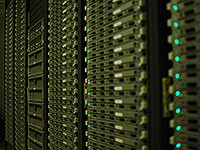
Data Center

Photo Credit: Flickr user SunGardAvailabilitySvcs - Creative Commons

I've been covering Green IT for a while now, but this is the first year I that recall not being able to keep track of all the new green data center announcements. And it's a good thing. While we have witnessed companies take a piecemeal approach to greening their server farms, 2009 is the year that facilities management, power distribution, HVAC and IT infrastructure finally started to come together and the result is a new breed of world-class data centers that any green geek would be proud to call their virtual home.

Here are some of the companies that helped make 2009 the year of the green data center and are sure to help keep the momentum going in 2010.

i/o Data Centers

How do you keep cool in Arizona? Other data center operators are migrating to cooler climates to free cool their facilities but i/o Data Centers bucks the trend and manages to operate a green data center efficiently and in a part of the country that is known for its relentlessly hot weather.

i/o Data Centers made a splash this year with its its 538,000 square-foot Phoenix ONE facility. Besides giving new life to an old building, the company further built upon its green cred by installing a 4.5 megawatt solar array on its roof. But the real reason the company is included in this list is its approach to cooling servers.

A couple of months ago I spoke with i/o Data Centers' President and Founder Anthony Wanger and key to achieving low PUE ratings, he says, is to go after the "low-hanging fruit." Sounds cliche, but it's a comparatively low cost tactic that's working for i/o Data Centers. Some of the ways i/o is keeping energy bills in check includes sealed plenums, variable speed air handlers, ultrasonic humidification and a thermal storage system. The latter, comprised partly of a "giant industrial cocktail," as Wanger puts it, that is kept at 22 degrees at night during cheaper, off-peak hours. When temperatures soar and the load on the grid is the highest, i/o turns off the chillers operates off "stored" cooling.

While discussing some ways IT can help businesses lower their environmental impact and cut energy costs, Wanger rattled off a bucketload of ways from the top of his head like virtualization, efficient cooling and digitization, which act to "decouple economic growth from energy costs." In that regard, i/o Data Centers is already leading by example.

IBM logoIt seems that every new data center that opens its doors these days is billed as green, doesn't it? The $12.4 million, 12,000-square-foot building from IBM and Syracuse University is no different. However, this is one green data center with some serious innovations that back up those green claims.

It's a given that you'll find energy-efficient servers, targeted cooling, and an energy monitoring and management platform, but it's the on-site, "tri-generation" system that really helps set the data center apart. Powered by natural gas, microturbines provide all of the facility's electricity and cooling (and heat, hence tri-generation). Waste heat from the microturbines is used to chill water using double-effect absorption chillers, which in turn is used to siphon heat from server racks with cooling doors.

Further efficiencies come from a direct current (DC) power distribution system, which eliminates the alternating current (AC) to DC conversion tax. All told, the data center will consume half the power of a traditional computing facility.

Read more about the new green data center here. You can also watch a YouTube video with some on-site footage after the break.

Six Tips For Green (and Greenwash-Free) Data Center Storage - Reuters/GreenBiz

Four billion dollars is spent every year on data center energy consumption and this number will only continue to climb. The type of data growth is also a contributing cost factor; mission critical data is growing in the enterprise environment. This means companies are buying more expensive energy hungry equipment to provide needed fast access and redundancy at both the server and storage level.

IBM Launches Software to Act as Smart Grid Glue for Startups - Earth2Tech

This morning IBM detailed a bit more about how it's acting as a sort of glue between utilities and third-party smart grid vendors, with the announcement of new software called "Solution Architecture for Energy and Utilities Framework (SAFE)."

Pillar kicks Intel's SSD to the curb, upgrades storage array - Computerworld

Bob Maness, Pillar's vice president of worldwide marketing and channel sales, said the company decided to go with STEC's Mach8 SATA SSD because it proved to have better performance in the array. Intel's X25-E, which has had firmware problems in the past, causes operational timeouts, Maness said.

Green Data Centers: GreenBytes Scores $8M for Energy Efficient Storage - Earth2Tech

One data storage appliance startup, Ashaway, R.I.-based GreenBytes, stepped onto the scene in earnest this week by announcing that it had scored $8 million in Series A funding from Battery Ventures to coincide with the debut of the company's GB-X storage appliances. The new storage systems, the GB-2000 and GB-4000, provide on-the-fly, data de-duplication services for active and just-created data, as well as backup and archived data.

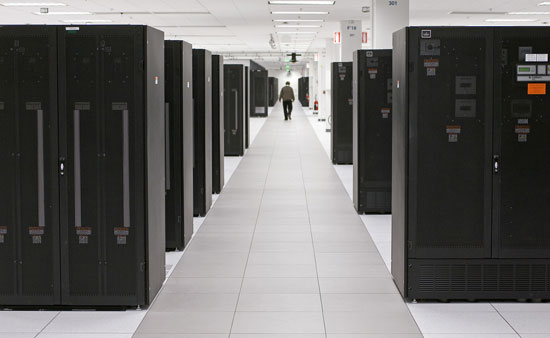
Inside IBM's deep green data center - Cnet

On the far right, you can see one of those: a back door heat exchanger designed for its high-end iDataplex server system. Called Cool Blue, the system circulates cold water through the door to lower the temperature of the heat coming from servers' fans.

Whitehall saves £7 million with greener IT - Computerworld UK

Whitehall has extended the life of PCs, made double-sided printing the default option, made sure computers are turned off at night, increased the reuse of IT equipment and increased server efficiency.

These helped cut the carbon footprint of central government computers by 12,000 tonnes, Smith said, the same as taking 5,000 cars off the road.


Startup builds enterprise class SSDs - The Inquirer

Pliant claims that its 3.5in drives are capable of up to 160,000 input/output operations per second (IOPs), and up to 120,000 for the 2.5in models. This compares with a quoted speed of up to 35,000 IOPs for Intel's X25-E SSDs.


Windows 7 Cuts Costs 20%, Microsoft Claims - InformationWeek

... based on early user feedback, Windows 7 can save companies $70 to $160 per PC in support costs and up to two hours per machine in support time annually.

Additionally, Windows 7's energy efficiency means enterprises can save about $50 per PC in annual electricity costs.


IBM, LSI Unveil High-Performance, Energy-Efficient Embedded Processor - eWeek

The 476FP runs at frequencies of more than 1.6GHz and 2.5 Dhrystone MIPS (million instructions per second), which officials said makes its performance twice that of current processing cores being used by OEMs. It also dissipates 1.6 watts, making it among the most energy efficient embedded processor cores.


UB Submits Plan to Reach Carbon Neutrality - University of Buffalo Press Release

Developed by UB's Environmental Stewardship Committee in partnership with consultants from Ecology & Environment, the plan covers the broadest range of environmental impacts from UB, from the teaching of more courses in sustainability and the funding of a seed program for environmental research to green computing and restrictions on freshman car ownership. The plan recommends that a senior-level sustainability director be hired to coordinate UB's progress toward climate neutrality.

Hard Drive PlatterI recently chatted with Analytico's Tom Trainer about his new GigaOM Pro report, "The Future of Data Center Storage" (subscription required) and wrote about some of the insights I gleaned for Earth2Tech (thanks Katie!).

I was encouraged to find out that storage vendors like IBM and EMC aren't just pursuing green IT strategies for their own operations and manufacturing, they're also pushing products that perform more efficiently and help enterprises derive more value from the storage they already own.

Why is it important? Cloud computing and ballooning stores of data in server-rich environments will soon tax power grids. Many companies are already bumping their heads on their data center's power ceiling. Simply throwing more storage at the problem is hardly a solution.

Two of the technologies that can help are data de-duplication (dedupe) and thin provisioning.  How? My Earth2Tech article explains, but essentially it boils down to a popular mantra that's bandied about during these gloomy economic times: "Do more with less."

Photo Credit: Flickr/Stuart Bryant


IBM Tops Green500

Green500 - IBMNo stranger to ranking high on the Top500 list of supercomputers, IBM is also racking up eco-points with a formidable presence on the Green500 list.

In the latest ranking, IBM dominates the top 20, with the first spot going to a BladeCenter QS22 Cluster housed at the Interdisciplinary Centre for Mathematical and Computational Modeling at University of Warsaw. Powered by Cell processors, the system produces 536.24 megaflops per watt and has a total power envelope of 34.63 kilowatts. On the Top500 list, the supercomputer takes the 422nd spot.

Rounding out the top three are the DoE's BladeCenter QS22/LS21 Cluster and IBM's Poughkeepsie Benchmarking Center, both at 458.33 megaflops per watt.

The Green500 crew also offers some interesting observations. Predictably, efficiency is improving. Although the survey finds that the Green500 are consuming more power in aggregrate, they are 10 percent more efficient on average. And there's also this note on commodity processors:

Four- and six-core commodity processors keep improving in energy efficiency (265 Mflops/Watt to 273 MFlops/Watt) and surpass previous-generation custom processors. Now, 20 of the top 50 energy-efficient supercomputers utilize commodity processors.

You can find the latest Green500 list here.

IBM logo
IBM's survey of midsized businesses, "Inside the Midmarket: A 2009 Perspective" (PDF), reveals that a large majority of organizations in the 100 - 1000 employee bracket have Green IT squarely in their radar:

This year's survey also illustrates the growing role of emerging technologies, such as cloud computing, green IT, and social media -- areas that were not even included in a similar IBM study conducted in 2007. While lower on the scale of critical priorities, midmarket companies are actively pursuing several emerging technology areas to improve performance. The survey shows that 79 percent intend to implement, have established goals, or have started/completed implementation of Green IT solutions, followed closely by social media/Web 2.0 (71 percent) and Cloud Computing (69 percent).

It's also interesting to see cloud computing rank highly. However, the top priorities among the 1,879 surveyed include improving efficiency and reducing cost; increasing productivity; and better customer service, which is not surprising considering the current economic climate.

2 3  

Archives