USA vs. China

In recent weeks, particularly after the President's State of the Union Address, there's been a lot of ink spilled on the topic of China's ascendancy in the cleantech space. Essentially, most arguments boil down to the danger of forfeiting the cleantech marketplace to China at the expense of American jobs and innovation. Dire stuff, but is it accurate?

In her piece for Yale Environment 360, "America's Unfounded Fears of a Green-Tech Race with China," journalist Christina Larson offers another picture, one that's a touch more sober. Take, for instance, one hot-button topic that closely orbits just about every discussion on the topic: jobs. She writes:

Most of the green manufacturing jobs that the U.S. stands to "lose" haven't in fact been created yet; China will gain thousands of new jobs, but not necessarily at America's expense. Moreover, the United States will still gain many new green-collar jobs, in installation and maintenance, which can only be locally based, as well as sales teams, conference planners, and other positions already arising to support the growing green-tech field.

As for the risk of falling behind in the technology race, it's best to take a deep breath and approach matters with a bit more objectively.

At present, America still has significant advantages -- including the world's leading university system and the entrepreneurial culture and venture-capital spigots of technology hubs, particularly Silicon Valley. "Intellectual property rights have done a lot to hamper China's development of green technology," says Linden Ellis, U.S. director of nonprofit China Dialogue. "People would rather come to Silicon Valley and develop a technology where they know it will be protected by the law, right down to every line, than go to China and try to develop a technology there where maybe the components will be cheaper and there is a lot of interest, but people do not trust that their findings will be protected."

My take? If you look at the near-daily funding news posted my colleagues at Earth2Tech, the majority dealing with US-based companies -- you'll see that there's no lack of cleantech activity and technologival advances sprouting up on our shores. A little friendly competition between countries, like companies, is a good thing and not something to stress yourself into ulcers about. When it comes to improving the world -- and profiting from it -- a little home-grown innovation can go a long way.

Philips LivingColors

Last year around this time, I bemoaned the lack of availability in these parts. Soon after, Philips PR told me to wait until Q3 2009, but the summer came and went without the color-changing goodness. It may have taken a little longer than expected, but Philips LivingColors has finally hit the good old U.S.A.

The lamps, which have been available in Europe for years, use LEDs to produce an enormous variety of color lighting to match your mood without films or special bulbs. Jesus Diaz's review for Gizmodo from a couple of years ago gives you an idea of what to expect.


Amazon.com is carrying both models. The full-sized Philips 818566 LivingColors Translucent Changing LED Lamp with Remote retails for a cool $190, but as of this writing, order fulfillment takes one to three weeks. Disappointing (and a bit spendy) but hopefully the delay is a result of crushing demand.

For instant gratification with some trade-offs, there's the Philips 818565 LivingColors Mini Changing LED Lamp, which ships immediately and sells for $102 in white or $107 for the stylish black model.

Here's a link to a good review posted on Amazon, not because of the score -- though it's encouraging -- but because it highlights the differences between the U.S. and European/Asian models. Here are two:

1) the faceplate with the bulbs is a bit sturdier and has a few plastic dimples
2) the function which continuously cycles the colors is very gradual v. the rapid-fire changes in the Asian-market lamps

Like the woman in the promotional image above, I too am pleased. Now, which one to buy?

Turbine Light - TAK StudioHarnessing energy from the nation's roadways isn't a new idea but TAK Studio has a neat and visually striking twist on the idea.

As its name plainly implies, Turbine Light combines roadside lighting (LED?) with a turbine that captures wind and harvests breezes caused by passing vehicles. The concept is one of the entries in the Greener Gadgets design competition taking place in NYC on February 25.

Image Credit: TAK Studio

HP LogoHere's a great quote of the day from HP's John Bennett, head of data center transformation solutions:

"Anyone walking into a data center should break a sweat, not have to wear a jacket."

The idea of a toasty data center may send shivers down the backs of experienced data center managers, but the energy savings are worth it provided the hardware can take the heat (and that it's expelled properly). Running a warmer, less cooling intensive data center is just one of many steps companies can take to save money on operating their IT infrastructure, but as ZDNet's Heather Clancy reminds in the title of the post the above quote came from, it's critical to "take one step at a time."

Google Street View - Tree KillerGotcha.

Margaret Burnyeat of Vancouver, allegedly hired a crew to cut 23 trees on two lots she owned. There were two problems though. First, trees are protected by local laws requiring that you obtain a permit to down trees of a certain size, and secondly, she ony had permits to chop down two of them. Whoops.

Fortunately for the city -- and unfortunately for Margaret -- a Google Street View vehicle swung around the neighborhood that day and captured images of the crew and truck they used. Now she faces some hefty fines.

Wired has the story.

Image Credit: Wired/Google

Gartner

According to Gartner, by 2012, PCs will be so energy efficient that 60 percent of the greenhouse gasses attributed to them will have been generated before it's ever turned on.

From eWeek:

Regarding environmental breakthroughs, by 2012, Gartner expects that 60 percent of a new PC's total life greenhouse gas emissions will have occurred before the user turns on the machine for the first time, thanks to advancement in PC energy use. Additionally, carbon remediation costs are expected to be included in most IT business cases by 2014.

Source: eWeek

Solar Panel

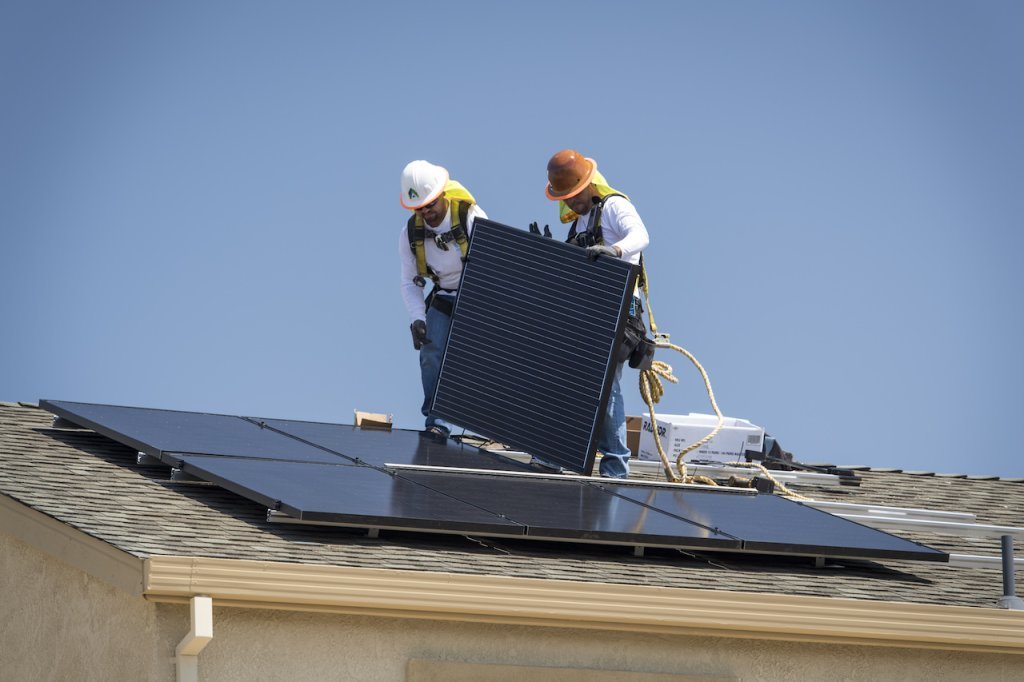
Some solar companies are stepping up to help the people of Haiti after a devastating earthquake flattened entire swaths of the country's capital, Port-au-Prince, leaving behind scores of injured residents and claiming untold numbers of lives.

Geek.com spotlights some of the companies that are generously contributing to the relief efforts. SolarWorld sent solar panels to power ten water pumping stations and solar streetlamp maker Sol has sent 15 units and plans to send 100 more.

Well done!

Photo Credit: Jeremy Levine Design - Creative Commons

Unless you're Microsoft, Google or Facebook, chances are that you can't simply build a new data center when yours starts getting a little long in the tooth. So how do you cope with an older computing facility that wasn't exactly built with energy efficiency in mind?

You buy time, and perhaps avert a costly new build altogether, with these tips from ComputerWorld's Robert L. Mitchell. Here's a good one that's often overlooked among all the coverage devoted to the latest energy saving innovations:

...If you're running an older data center and don't know where to begin - or even if you think you do - hiring a consulting engineer could pay off.

A typical engagement doesn't have to be a big affair, with a professional engineer conducting a full blown computational fluid dynamics analysis of your entire data center. By applying best practices, a good consultant can cut energy consumption by one third to one half more in an older data center.

Good stuff!

Facebook - HardhatIn a departure from signing leases with data center companies like Fortune and Digital Realty trust, Facebook broke ground on its own $180 million facility in Prineville, Oregon.

Why Prineville? According to the Silicon Valley / San Jose Business Journal,

Tom Furlong, Facebook's director of site operations, said the company underwent a "rigorous review process." But Prineville offered the best set of elements, including a good climate for environmental cooling, renewable power resources.

Of course, a $2.8 million a year in tax breaks doesn't hurt either.

For the region, it adds up to 300 construction jobs and 35 full-time jobs when it's completed. For Facebook, the location helps it cut down on cooling cost. When the new data center opens in 2011, it will use outside air 60 to 70 percent of the year to keep servers cool. The rest of the time it will use an evaporative cooling system.


The 147,000-square-foot data center will feature another innovation, a proprietary UPS system that will lower power consumption by 12 percent. Little else is known about it for now, but this implies that Facebook is diverging from Google's distributed UPS (aka "batteries included" servers) strategy or pursuing its own with some sort of twist.

Head over to the official Prineview Data Center Facebook page for more images and a video of this week's groundbreaking.

Photo credit: Facebook

No More Raised Floor

| No Comments | No TrackBacks

Raised Floor Photo credit: Flickr user information services@bond - Creative Commons

It may soon become a signature of green data centers, according to Matthew D. Sarrel of the Sarrel Group. Over at eWeek, he writes that it may come time to say good-bye to those perforated tiles that were designed to have cool air filter up into server racks. More often than not, it tends to mostly pool down there doing servers no good.

And then there's maintenance and the problem of what can sometimes occurs in the spaces underfoot...

Raised floors are simply not efficient operationally. I had the experience many years ago of building a 10,000-foot data center in a large city. Several months after it was built, we began to have intermittent network outages. It took many man-hours to locate the problem: Rats were chewing through the insulation on cables run below the raised floor. Rats aside, additions, reconfigurations and troubleshooting of the cable plant are much easier on your staff when cables are in plain sight.

Ew.

Plus, there's the issue of weight. As racks get more and more dense, they can put strain on raised floors, placing limits on how many servers a data center can accommodate, even if it has square footage and power to spare.

Archives

Add to Technorati Favorites
Follow ecoINSITE on Twitter

    Recent Comments

    • Micah: This is a great post.. Very informative... I can see read more
    • Electronic Medical Records: Great point of view on EMR. I think patients should read more
    • Cheap Computers: Refurbished computers are quite useful especially Dell and IBM and read more
    • Henrico Dolfing: Hi Pedro, thank you very much for finding my presentation read more
    • solar panels: Suntech is getting aggressive in usa solar market.I hope they read more
    • Danieljohnson: That was a great Performance Demo of AMD Istanbul. Its read more

    Find recent content on the main index or look in the archives to find all content.