Results tagged “storage”

Green PC - bit-tech.net
A green PC is the sum of its parts. Credit: bit-tech.net

A "green" PC isn't really energy efficient if it consumes less electricity at the expense of performance. That's the subject of bit-tech.net's excellent article that tackles the green claims often made by PC component makers. By pitting various PC parts against one another, Richard Swinburne draws up a pretty good picture of how to balance energy savings without sacrificing computational power.

Take, for instance, hard drives vs. SSDs.

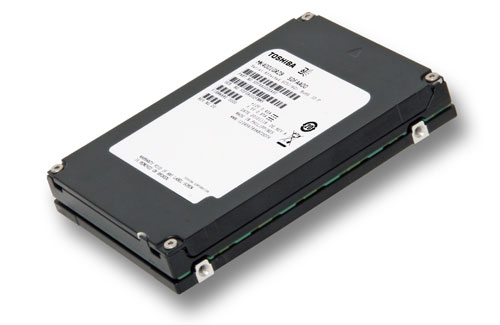
Surprisingly, the SSD doesn't save us that much power either - just 2 - 3W again on top of the 5,400 - 5,900RPM drives at idle and when writing, however compared to the performance drives from Seagate and Western Digital the difference is a more considerable 7W per drive. You're unlikely to have many SSDs unless you're in enterprise storage, where 7W a pop (or more for 10 - 15k SAS drives) means power savings abound.

Beyond storage, a lot also hinges on the type of processor (AMD or Intel), memory, power supply and motherboard. Selecting the wrong one can not only blow the efficiency gains of the rest, but also fail to deliver the performance boost you'd expect by pumping more electricity through them. And vice versa.

It goes to show that an energy efficient -- yet very capable -- rig is truly the sum of its parts.

Toshiba/Keio University - SSD A terabyte of storage on your fingertip? If Tadahiro Kuroda and his team of researchers from Toshiba and Keio University in Tokyo have developed a technique that packs 128 NAND flash chips and a controller into the area of a postage stamp, effectively reducing the size of SSDs by 90 percent.

Are you ready for more good news? Apart from undergoing the shrink ray treatment, the new SSDs are said to consume 70 less electricity, will be cheaper to produce and a prototype can transfer data at 2.5 Gbps, higher than SATA 1 and SATA 2 drives.

The group hopes to see the technology go into production in 2012. If so, expect it to be an exciting year for data storage market, one that ushers in a new breed of energy efficient storage systems.

Image Credit: PhysOrg.com/Prof. Tadahiro Kuroda

Hard Drive PlatterI recently chatted with Analytico's Tom Trainer about his new GigaOM Pro report, "The Future of Data Center Storage" (subscription required) and wrote about some of the insights I gleaned for Earth2Tech (thanks Katie!).

I was encouraged to find out that storage vendors like IBM and EMC aren't just pursuing green IT strategies for their own operations and manufacturing, they're also pushing products that perform more efficiently and help enterprises derive more value from the storage they already own.

Why is it important? Cloud computing and ballooning stores of data in server-rich environments will soon tax power grids. Many companies are already bumping their heads on their data center's power ceiling. Simply throwing more storage at the problem is hardly a solution.

Two of the technologies that can help are data de-duplication (dedupe) and thin provisioning.  How? My Earth2Tech article explains, but essentially it boils down to a popular mantra that's bandied about during these gloomy economic times: "Do more with less."

Photo Credit: Flickr/Stuart Bryant


Companies Report That Virtualization Investments Are Indeed Paying Dividends - eWeek

The most recent example: San Francisco-based IT services provider BEAR Data Systems, a Cisco Systems gold-certified partner, revealed June 24 that its hardware and virtualization tools are enabling clients to achieve energy savings of 30 percent or more.

Energy-efficient servers earn a star -- but so what? - Computer World

But the Energy Star label doesn't tell the full story on servers and their energy consumption. The current specifications measure energy use only under limited circumstances and for specific types of machines. Blade servers, so popular in enterprise data centers, don't qualify, for example.

How to green your storage - SearchStorage - TechTarget ANZ

Avoid overspending and overprovisioning.

It's obvious that spinning disk is the source of most storage power consumption, and unused spinning disk represents wasted energy. But there are several challenges in growing storage incrementally, including the organisation's ability to accurately forecast storage capacity needs. Beyond capacity planning, it requires a relationship with a vendor who can support the incremental storage growth. The technology must also allow the storage to expand easily and with minimal disruption.

Gartner Zooms in on Key Cloud Computing Attributes - eChannelLine

The first of the attributes is that it's service-based. According to Gartner, "Consumer concerns are abstracted from provider concerns through service interfaces that are well-defined. The interfaces hide the implementation details and enable a completely automated response by the provider of the service to the consumer of the service..."

Who uses cloud computing? Startups do, VCs don't - VentureBeat

Cloud computing is a trendy term right now, but how widely is it actually used? During the venture capital panel at today's Structure 09 conference in San Francisco, VCs offered two pieces of anecdotal data that create a nice contrast between who is and isn't on the cloud.

Twitpic Spotlight: @greenwombat's Deutsche Bank carbon counter in NYC

Share photos on twitter with Twitpic


The new kid on the virtualization block - Grumpy Apache

An obvious minus, however, is the integration of VMware. I am using VMware server 1, which is almost unsupported on Fedora in general. In particular, it it unsupported for Fedora 11. As usual, it was no problem to find a matching kernel patch. But, what a surprise, it is no longer sufficient to patch the VMware modules: You need to patch the kernel as well.

2009 Airline IT Trends Survey: Overview - Flightglobal

BA has substantially reduced its operations budget through simplification and standardisation, as well as adopting green IT strategies to lower costs, and has cut spending on new projects by about half."One of the things I recommended we postpone was investment in an enterprise resource planningsystem." says Coby. "It's important and needed but would the substantial investment in that generate any more revenue this year? And would it make our customers happier or more inclined to travel with us again? No, probably not, so let's invest in something that will."

Green storage has limited ROI, but supports overall efficiency - Forrester Research ZDNet Blogs

...according to a report Forrester published recently, the amount of money typically spent on electricity to power and cool a TB of storage is only about 1% of the cost of buying that TB of storage (or about 4% of the annualized cost of buying that storage given that you only have to buy the TB once every 3-5 years but you power it every year).

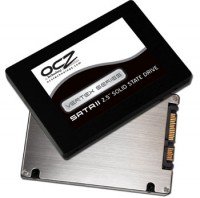
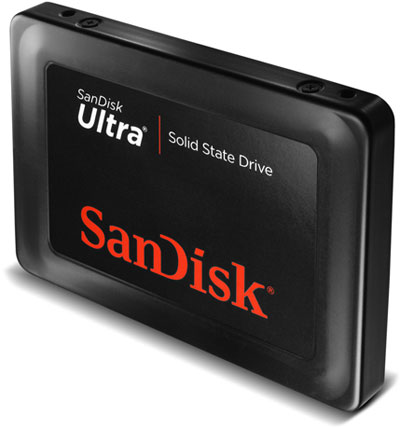
Western Digital Introduces Solid State Drives - DailyTech

Western Digital today launched its SiliconDrive III solid state drive storage products, with technology based from its acquisition of SiliconSystems in March.

Infortrend's green ESVA attacks the storage virtualisation market - IT-Director.com

The five ESVA systems announced today--three for fibre channel (FC) and two for iSCSI SAN protocols--provide much more functionality while maintaining its green theme. The cabinets come populated with disk drives without the user having a say in which (except by selection of the appropriate model) with RAID 5 or 6 supported. Hardware components are hot-swappable and there is smart drive 'spin-down' to save on power consumption and cooling when not in constant use (i.e. especially over night).

DataSlide reinvents hard drive - The Register

Charles Barnes, DataSlide's CEO, said: "DataSlide's Massively Parallel architecture with 64 heads per surface could saturate a 32-lane PCI express bus. The Hard Rectangular Drive has the industry reliability and cost advantages of Hard Disk Drives with superior performance and lower power then Solid State Drives.

"The HRD uses over 60 per cent lower power than HDDs and during idle the media has zero power dissipation making it the green storage winner."

'Green computing' project points to potential for energy savings - Indiana University News Room

"This gifted and dedicated team of 'green IT' innovators has shown that desktop computer energy use can be cut nearly in half with virtually no impact on the user for a relatively small initial investment," said Bill Brown, IU Bloomington director of sustainability. "If this can be scaled up to encompass the entire IU computing inventory, the return on investment may have everyone banging on IU's door to find out how it was accomplished."

Hypervisor targets embedded multi-core - LinuxDevices.com

The Wind River Hypervisor is designed to enable embedded developers to replace multiple boards or CPUs with a single board or CPU, thereby saving on cost and power consumption, says Wind River. Developers can also use the technology to create devices that leverage multiple OSes, and reduce complexity when integrating multi-core processors.

D-Link Launches New D-Link 8-Port Gigabit Desktop Switch DGS-2208 - Energy Business Review

This second generation release of the D-Link Green switches is part of the D-Link Green technology computing initiative that includes manufacturing environmentally responsible products, ec006F-friendly packaging, optimizing devices for ENERGY STAR compliance, and providing consumer education and recycling programs.

Dell Does Dedupe

Dell - Data Deduplication

Dell has officially launched a data deduplication site and a cursory glance reveals an intro to the technology, an assortment of whitepapers, and of course, a healthy spotlight on the IT vendor's partnership with the dedupe mavens at CommVault.

Here's a blog post by Greg White explaining Dell's approach to the capacity-sparing technology. If you're a Dell shop it's worth a look

[via Twitter @dell_storage]

Adding a hard drive to your Windows PC is an easy way to expand storage capacity if you find yourself running out of room for your files. But there are two problems with this approach.

First, it'll cost you money. There are bargain basement drives out there, but they're unlikely to be of the energy efficient variety. Which leads us to the second point, power savings. Installing another drive adds yet another component that you have to keep powered. And while heat-wise they pale in comparison to processors, they can contribute to your PC's thermal load making the fans work harder.

There is one super cheap option: delete files.

You're thinking, "Thank you, Captain Obvious!" What you may not have considered are the less obvious places to reclaim drive space, which can free up megabytes, if not gigabytes, of space.

Before you take a single step forward, an important reminder: backup your files!

Everyone needs a backup plan, no excuses. Things happen, no matter how well maintained your PC. There are tons of backup guides online and many external drives ship with software that makes it dead easy to make copies of your data. So, take this opportunity to backup (or ghost, even better) your PC and check the integrity of your backup files.

Got that? Good, then read on...

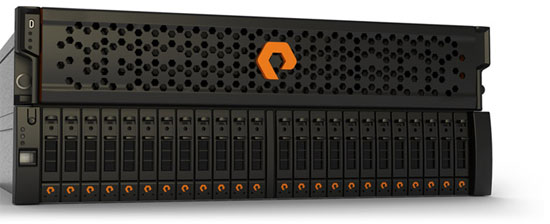
Sun Storage 7310Sun is adding oomph to entry-level enterprise storage arrays with solid-state drives.

Not to worry, the flash-packing storage devices play a supplementary role in the Sun Storage 7310, acting more like cache to improve performance. That cache can swell up to 600 GB, which in concert with with up to 64GB of DRAM, is meant to significantly improve I/O rates.

Mass storage--up to 96 TB worth--is comprised of traditional 7200 RPM SATA drives. Sun envisions that IT shops will be smitten by the application performance boost and power savings of this hybrid approach. The company claims that the 7310 uses three times less power savings than a traditional disk-based array.

Sun's Storage 7310 Unified Storage System (specs here) is available now. It will set you back $40,165 US for a base configuration.

Kudos to Sun for helping to bridge the hard drive SSD chasm in enterprise storage.

IBM logo
IBM is touting massive DS2 Database performance gains by employing solid state drives and using software tools, like those present in the "targeted data placement" smarts of the IBM Data Facility Storage Management Subsystem (DFSMS), in zSeries and DS8000 environments. An 80 percent reduction in the physical storage footprint and energy savings of up to 90 percent are also possible, IBM reckons.

Here's an example that might provide a compelling business case for organizations considering the technology:

A banking institution running on the System Storage DS8000, DB2 for zOS and SAP, can improve their business performance by more than 30% and reduced their physical storage footprint by 60% and thereby reducing their energy consumption by more than 70%. Improved performance and reduced costs in energy can shift the focus on the company's information and generating a new of intelligence to anticipate new customers' demands.

SSDs are also gaining ground in IBM's other product lines namely becoming options in System x, System Storage DS8000 (as mentioned above) and all POWER6 systems.

Source: Press Release

2 3  

Archives